
Quick answer: is Amnezia VPN safe?
Amnezia is a credible open-source VPN project with unusually transparent security testing, but "Amnezia VPN" is not one product with one privacy answer. Self-Hosted keeps server credentials on your device and shifts trust to a server you control. Free and Premium use managed infrastructure and collect limited device data. The public audits found serious flaws, including two critical findings later marked fixed, but they do not prove every current no-logs, RAM-only or performance claim.
Our recommendation is therefore conditional. Amnezia Self-Hosted is a strong option for technically confident readers who need censorship resistance and can maintain a server. Free can be useful for reaching blocked information, but it is not the same privacy arrangement. Premium may be convenient in restrictive networks, yet the absence of reproducible infrastructure and performance testing prevents an unqualified recommendation as of 24 July 2026.
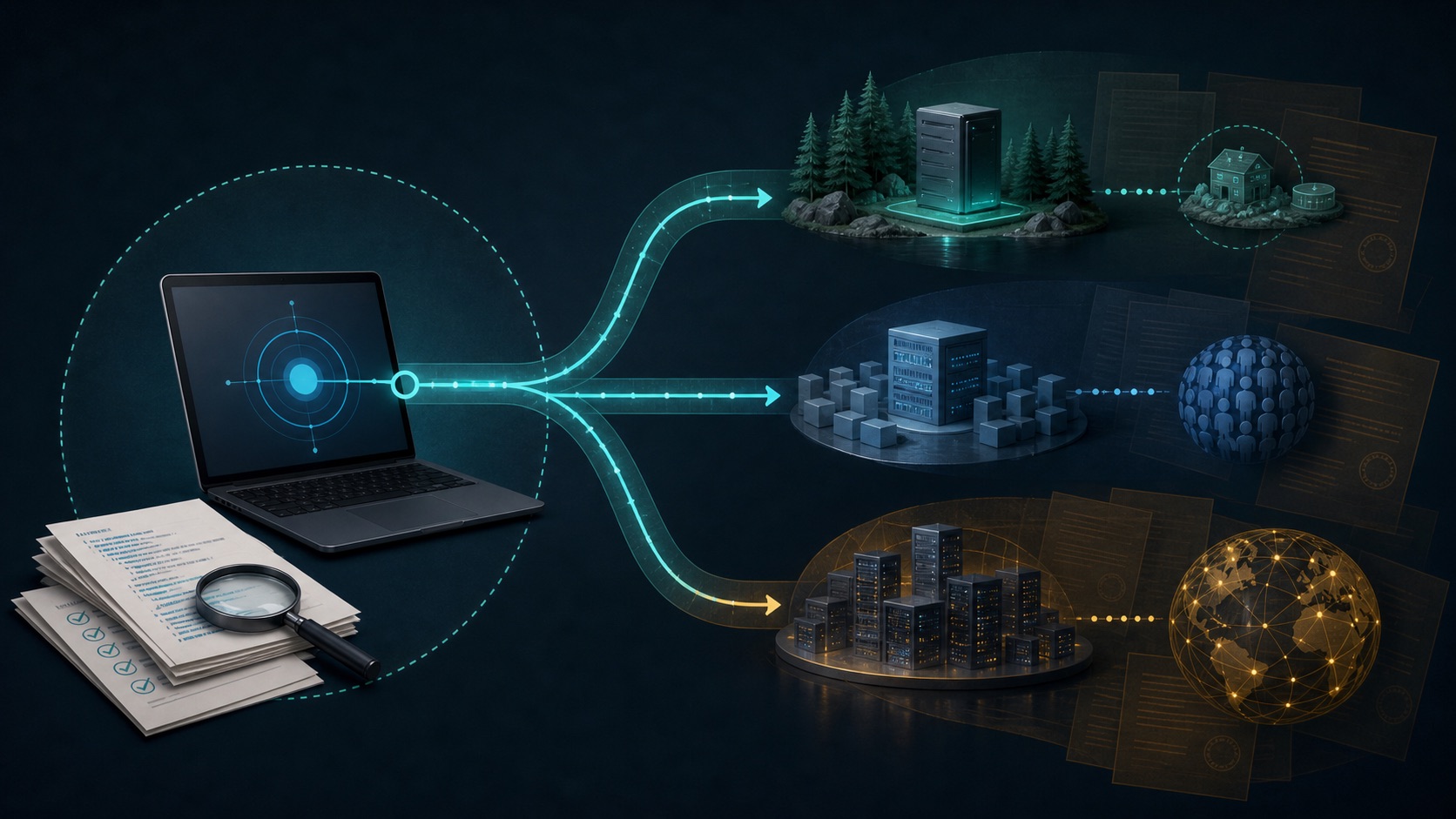
Amnezia is three different privacy products
The strongest case for Amnezia is straightforward. It publishes its client code, supports protocols designed for hostile networks and has repeatedly allowed independent testers to publish what they found. That gives readers more evidence than a conventional VPN landing page. The mistake is to turn that evidence into a single verdict covering three different services.
| Mode | Who supplies the exit server? | Main trust relationship | Best fit |
|---|---|---|---|
| Self-Hosted | You or a host you choose | Amnezia software, your configuration and your hosting provider | Technical users and censorship resistance |
| Free | Amnezia-managed service | Client software plus the managed service and its operators | Limited access to blocked sites |
| Premium | Amnezia-managed commercial network | Client software, account/payment path, infrastructure and operators | Turnkey access across multiple locations |
This distinction changes the burden of proof. Open-source code can make a client inspectable. It cannot show what a remote server records, who can administer it, whether every deployed configuration matches the audited code or which legal entity answers a lawful request. Those questions return as soon as Amnezia, rather than the reader, supplies the exit service.
What Amnezia collects in each mode
Amnezia's policy, effective 20 February 2026, draws a clearer boundary than the previous version of this review did. For Self-Hosted, it says the IP address, login and password or key used to configure a server remain on the user's device and are not collected, transmitted or stored by Amnezia.(Amnezia, 2026)
Free and Premium are different. The policy says both process the app version, operating system and a device identifier for compatibility and abuse controls. Free may also process the user's IP address to analyse regional blocking, and the managed services may temporarily process IP addresses to prevent abuse. Amnezia says it does not collect browsing history, DNS queries or traffic content. These are first-party policy statements, not independent observations of production servers.
A fair opposing case is that this is still a relatively narrow collection set and that short-lived abuse data may be necessary to keep a public service functioning. That may be true. The provider should nevertheless publish retention windows, controller allocations, infrastructure audit scope and aggregate lawful-request statistics before readers are asked to treat "nothing to hand over" as established fact.
What the security audits actually found
Three public 7ASecurity assessments are the strongest part of Amnezia's case. The 2022 mobile and desktop review reported 11 vulnerabilities and five hardening recommendations. The July 2024 review covered Android, iOS, desktop, AmneziaWG and XRay and reported four vulnerabilities plus six hardening recommendations.(Open Technology Fund, 2022)(7ASecurity, 2024)
The December 2024 to January 2025 assessment examined security and privacy changes, supply-chain controls and a threat model. It reported three vulnerabilities and three hardening recommendations. Two findings were rated critical: an exposed Premium administrative API could permit configuration tampering, and importing a malicious OpenVPN configuration could lead to arbitrary code execution. The report marks both resolved and independently confirmed by the assessor.(7ASecurity, 2025)
That record contradicts Amnezia's current FAQ statement that the audits found no critical vulnerabilities. The defensible account is better, not worse: critical issues were found, disclosed, fixed and retested. What the reports do not provide is a current full penetration test of every Premium backend, server location and operational control. The 2025 report itself recommends further backend assessment and continuing supply-chain hardening.
Who operates Amnezia?
Current first-party notices now allocate the two most important legal roles. The privacy policy names ANARCHY LAB S.R.L., registration number J2026000670007, in Bucharest, Romania, as the data controller. It says official requests must be consistent with Romanian and EU law. The Premium payment terms name EUPHORIATECH LIMITED, registration number HE 484287, in Nicosia, Cyprus, as the service provider.
Estonia's e-Business Register separately verifies Privacy Technologies OU, registry code 16140950, as a Tallinn company entered on 18 January 2021. It lists Stanislav Shakirov as the sole shareholder and beneficial owner and data hosting or infrastructure as its principal activity.(Estonian e-Business Register, 2026) Google Play identifies AMNEZIA UNIPESSOAL LDA in Portugal as the Android publisher. The current notices do not explain whether those two entities develop software, operate infrastructure or perform another group role, so this review does not assign one.
For Self-Hosted users, the chosen server host and server jurisdiction usually matter more to traffic exposure. For Free and Premium users, Romanian controller law and the Cypriot service-provider terms are directly relevant. A fuller group structure and infrastructure allocation would still improve accountability, but the current record is sufficient to avoid the previous review's inaccurate Estonia-only label.
Protocols, censorship resistance and open source
Amnezia's technical differentiator is not stronger encryption than every other VPN. It is a wide choice of transports, especially AmneziaWG and XRay, intended to make encrypted traffic harder to classify and block. AmneziaWG retains WireGuard's cryptography while changing observable packet characteristics. Version 2.0 can imitate permitted traffic patterns and requires AmneziaVPN 4.8.12.9 or later.(Amnezia Documentation, 2026)
Our separate AmneziaWG technical explainer owns the packet-mechanics question. The review's narrower conclusion is that obfuscation can improve reachability but does not create anonymity. A VPN still cannot hide account logins, browser fingerprints, payment records, malware or activity visible after traffic leaves the exit server. Readers should also check local law, employment rules and platform terms before using any circumvention tool. Our analysis of why VPN blocking remains technically costly explains the wider policy context.
Price, performance and what we have not tested
A read-only checkout check on 24 July 2026 showed USD 28 for six months and USD 48 for one year, with a warning that payment-gateway fees can change the final amount. The Premium page advertises seven devices, up to 200 Mbps, RAM-only servers, 99% uptime, 24-hour support and 20 locations. Those are provider claims. We have not bought Premium or run a reproducible TheVPNMatrix speed, leak, kill-switch, streaming or censorship test, so this review does not present those claims as measured results.
The Premium page still contradicts itself: most of the page and the refund answer promise 14 days, while one payment FAQ sentence says seven. The separate payment terms, updated 15 May 2026, state a 14-day withdrawal period, subject to possible limits after activation, review time and payment or network fees.(Amnezia, 2026) We treat those terms as the controlling first-party record and the seven-day FAQ sentence as stale copy. Readers should save the terms shown when paying. We did not create an account or make a purchase to test the refund process.
Version numbers are platform-specific. Google Play listed Android 4.8.19.0, updated 15 June 2026, while GitHub labelled 4.8.15.4 as its latest packaged release when checked. That is not necessarily a contradiction: app stores and repository packages can move on different release tracks.(Google Play, 2026)(Amnezia VPN, 2026)
How Amnezia scores in our matrix
Amnezia currently scores 3.44 in our comparison formula, last verified 30 May 2026. That number combines unlike modes and should not be read as a laboratory verdict on Premium performance. It rewards open-source code, protocol flexibility and published audit evidence, while penalising gaps in managed-service evidence, ease-of-use and independently verified commercial features.
The score is useful only with the threat model beside it. Self-Hosted can outperform the number for a capable user facing VPN blocking. Premium can underperform it for a reader whose priority is a fully verified no-logs operation, clear corporate accountability or demonstrated streaming reliability. Our public methodology explains the weights, and the comparison tool lets readers test alternatives without changing the evidence to suit an affiliate relationship.
Who should use Amnezia
Choose Self-Hosted when censorship resistance, control over the exit server and inspectable software matter more than convenience, and when you can patch and secure a server. Check the host's jurisdiction and logging practices, protect the server credentials and keep the client and server components updated.
Consider Free cautiously when the immediate need is access to blocked information and the limited managed-service data collection fits your risk. Do not assume that "free" means no operational data or that a VPN solves endpoint and account privacy.
Wait or compare Premium if corporate accountability, refund certainty, independently measured performance or audited production infrastructure is central to the decision. The burden of proof sits with Amnezia to publish production-infrastructure evidence, correct the seven-day FAQ sentence and stop describing audits that found critical issues as finding none. Until then, a provider with clearer current evidence may be the more proportionate choice. Start with our VPN limits guide if the threat model is still unclear.
Frequently asked questions
Is Amnezia VPN safe to use?
Amnezia has a stronger public client-security record than many VPNs: its code is open source and three 7ASecurity assessments disclosed findings and retested fixes. Safety still depends on the mode. Self-Hosted shifts trust to your server host and configuration; Free and Premium remain managed services whose infrastructure and current no-logs claims were not fully verified by the published client audits.
Is Amnezia VPN really free?
The open-source client is free. Self-Hosted requires a server that you provide or rent. Amnezia Free is a separate managed service for accessing blocked sites. Amnezia Premium is paid: on 24 July 2026 its checkout showed USD 28 for six months or USD 48 for one year, before possible payment-gateway fees.
What does Amnezia VPN collect?
Amnezia's policy says Self-Hosted server credentials stay on the device. Free and Premium collect app version, operating system and device ID; Free also processes IP addresses for regional-blocking analysis, while managed services may temporarily process IP addresses for abuse prevention. The policy says it does not collect browsing history.
What did the Amnezia security audits find?
The three public assessments found vulnerabilities and hardening opportunities. The 2025 report included two critical findings involving Premium administrative configuration access and malicious OpenVPN configuration import. The report marks both fixed and retested. The audits support confidence in the reviewed code and remediation process, not a blanket claim that every managed server is secure or keeps no logs.
Where is Amnezia VPN based?
The current privacy policy names ANARCHY LAB S.R.L. in Romania as data controller. Premium payment terms name EUPHORIATECH LIMITED in Cyprus as service provider. Estonia's register verifies Privacy Technologies OU, and app-store records identify a Portuguese publisher, but current first-party notices do not clearly explain those entities' operational roles.
Does AmneziaWG make you anonymous?
No. AmneziaWG changes the visible shape of WireGuard traffic to make VPN detection and blocking harder. It does not hide account activity, browser fingerprints, payment trails, endpoint compromise or the traffic leaving a VPN server. Use it lawfully and treat it as a reachability tool, not an anonymity guarantee.
References
References
- [1]7ASecurity (2024) 'Pentest Report: AmneziaVPN, second review', 7ASecurity. Available at: https://7asecurity.com/reports/pentest-report-amneziavpn2.pdf (Accessed: 24 July 2026).
- [2]7ASecurity (2025) 'AmneziaVPN Software Audit Report, public RC1.1', 7ASecurity. Available at: https://7asecurity.com/reports/pentest-report-amneziavpn3-RC1.1.pdf (Accessed: 24 July 2026).
- [3]Amnezia (2026) 'Privacy and Acceptable Use Policy', Amnezia. Available at: https://amnezia.org/policy (Accessed: 24 July 2026).
- [4]Amnezia (2026) 'Amnezia Premium', Amnezia. Available at: https://amnezia.org/premium (Accessed: 24 July 2026).
- [5]Amnezia (2026) 'Premium payment terms', Amnezia. Available at: https://pay.amnezia.org/payment-and-terms-of-use/ (Accessed: 24 July 2026).
- [6]Amnezia Documentation (2026) 'Using AmneziaWG 2.0 Protocol on Self-Hosted Servers', Amnezia Documentation. Available at: https://docs.amnezia.org/documentation/instructions/new-amneziawg-selfhosted/ (Accessed: 24 July 2026).
- [7]Amnezia VPN (2026) 'Amnezia client releases', GitHub. Available at: https://github.com/amnezia-vpn/amnezia-client/releases (Accessed: 24 July 2026).
- [8]Estonian e-Business Register (2026) 'Privacy Technologies OU, registry code 16140950', Centre of Registers and Information Systems. Available at: https://ariregister.rik.ee/eng/company/16140950/Privacy-Technologies-O%C3%9C (Accessed: 24 July 2026).
- [9]Google Play (2026) 'Amnezia VPN', Google Play. Available at: https://play.google.com/store/apps/details?id=org.amnezia.vpn (Accessed: 24 July 2026).
- [10]Open Technology Fund (2022) 'Amnezia VPN Apps Mobile and Desktop Pentest Report', Open Technology Fund. Available at: https://www.opentech.fund/security-safety-audits/amnezia-vpn-apps-mobile-desktop-pentest-report/ (Accessed: 24 July 2026).